'Hands-on Help for SMEs' and Smart Technical People'
Robotics in Manufacturing
Robotic Material Handling
Boost Production, Standardise Quality & Free-up your Workforce for Higher Level Tasks
Plus a range of SME robotics application and case study short videos
Robotic Manual Handling Examples - Intro
Material handling robots are transforming how modern production environments move, select, and manage products or components. These systems automate the transfer of parts between workstations, storage locations, and machines—integrating seamlessly into CNC machining, assembly, and inspection workflows. By taking over repetitive manual handling tasks, robots free up skilled employees to focus on higher-value activities such as process improvement, quality control, and production planning.
Unlike manual labour, robotic systems deliver consistent, continuous performance to a defined standard. They excel in environments requiring precision, repeatability, and speed—key drivers of machining productivity and operational efficiency. For heavy, hazardous, or awkward tasks, robotic material handling removes safety risks while supporting compliance and improving workplace conditions. This is particularly valuable in sectors where precision engineering, quality assurance, and reliability are critical.
Is Robotic Material Handling roight for Your Business?
If you already use some level of automation or are exploring smart manufacturing, robotics is a natural next step. Across industries including pharma, biotech, chemicals, energy, food production, general engineering, and the automotive and aerospace supply chains, businesses are adopting automation to stay competitive. Robotic systems increase production throughput, improve machine utilisation, standardise output, and support lean manufacturing by reducing waste and variability.
Modern solutions now integrate with Industry 4.0 systems, enabling real-time machining data analysis, digital machining workflows, and predictive maintenance. Collaborative robots (cobots), AI-driven automation, and flexible robotic cells are making adoption more accessible and scalable—even for smaller operations. These technologies support faster cycle time reduction, better process control, and improved use of cutting tools and equipment.
The real challenge is not whether robotics works—it’s how to implement it effectively. Key considerations include return on investment, integration with existing CAD/CAM and CNC programming systems, scalability, and ease of customisation. Businesses must also evaluate which processes offer the fastest gains—whether in workholding, part loading, metrology, inspection techniques, or finishing processes.
Understanding what your competitors are adopting, and when to invest, is critical. The right robotic material handling strategy can reduce costs, shorten lead times, enhance surface finish consistency, and strengthen overall production resilience. For manufacturing businesses aiming to modernise and compete globally, robotics is no longer optional—it’s a strategic advantage.
Automation IG custom robotic material handling cell. Custom designed cell, conveyer, pallet handling hardware, and EOA tooling resulted in increased efficiency of packaging operation and elimination of packaging backlogs.
Kaufman Engineered using FANUC Robots in an integrated system to undertake a range of automated tasks. These include palletizing, labelling, sorting (using a vision system), collating and stacking.
Courtesy of Mitsubishi. Turning to robots for automated material removal can improve conditions for your employees. You don't have to worry about robots developing repetitive stress injuries. Robots can also improve the quality of the deburring operation by performing the task with a high degree of consistency.
Big Sky Engineering, a leading robotic integrator for medical, automotive, plastics, and other industries, delivers an advanced vial handling system powered by the FANUC CRX-5 collaborative robot and integrated 3D vision technology.
Universal Robots has reinvented industrial robotics with lightweight, flexible robot arms. Tasks previously thought impossible to automate due to cost and complexity, are now achievable with the user-friendly robots.
The Danish-designed robot arms work separately or as dual arms demonstrated here with the UR5. In more than 45 countries, from the small machine shop to the large auto assembly line, Universal Robots optimize production, relieve employees from strenuous or monotonous tasks, and ensure quality control.
ABB Robotics: Every year the International Federation of Robotics (IFR) issues statistics on the top applications for industrial robots. This movie features examples from the top 10 - including Arc Welding, Spot Welding, Materials Handling, Machine Tending, Picking Packing Palletizing, Painting & Assembly
Robotic Depalletizing & Repalletizing Plastic Pails 10 Pails Min Inline Labeling Cell: This robotic depalletizing and repalletizing system automates the movement of plastic pails through an inline labeling operation while maintaining continuous pallet-in to pallet-out flow. A FANUC M-410iB/315 handles multi-pick depalletizing and repalletizing, while a FANUC M-20iB/25 places tier sheets to protect throughput and cycle time.
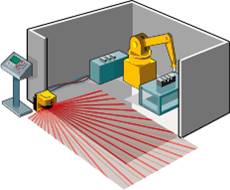
Top Tips for staying safe when working alongside Robots
(Courtesy of FANUC & Industrial Technology)
As the number of robot installations increases, so inevitably does the interaction between people and their robotic colleagues. This means the issue of worker safety is raised to the fore. So what steps should you take to avoid robot-related accidents when humans and robots are sharing the same workspace… more
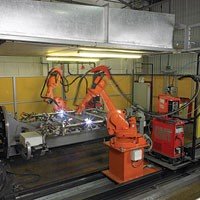
Using Robots for Bespoke and Low Volume Processes
(Courtesy of ABB Robotics & Industrial Technology)
The benefits of robotic automation for mass production processes are well recognised and understood. Visit any modern automotive plant, for example, and you are likely to see rows of robots engaged in a broad range of activities, each playing their own specific role in production. There are an increasing number of examples of companies that are integrating robotic automation into low volume processes across a range of applications, from production of medical devices through to welding and parts handling... More
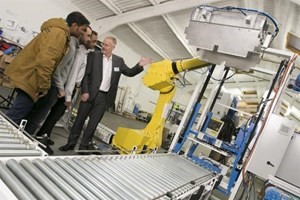
Busting the Myths around Robotics for SMEs
(Courtesy of Pacepacker Services & Eureka Magazine)
In many industrial operations they have long been integrated into wider automation and production processes. Why then are so many SME's,still deterred by robot technology and cautious about applying it to their processing and packaging operations? Time to tackle the most persistent myths... More
Try us! Search for any topic...
Home
Freelance Engineer Advice
Sustainable Manufacturing Help
Biggest Biz Problems & Solutions
Improving Manufacturing Productivity
Digital Manufacturing 4.0
Helping Your Business Thrive
Be the Best Engineer You can be
Essential Engineering Info
Lean Manufacturing Essentials
Product Development Essentials
CAD Engineering Essentials
Machine Shop Essentials
Skills, Career and Jobs
The Skills Shortage is Critical
Finding Your Ideal Engineering Job
Engineering Internships & Placements
Proactively Managing Your Career
Engineering Leadership & Management
Business & Industry
Business & Industry Essentials
Finance for Manufacturers
Marketing for Manufacturers
Emerging from Recession?
Affordable, No-Hassle Help
Familiar Training Frustrations
How to Access Supply Chains
No-Nonsense Manuals
Advice Manufacturing eBooks
Lean Manufacturing eBook
Product Development eBook
CAD Engineering eBook
Engineering Leadership eBook
Engineering Jobs eBook
Career Management eBook
State-of-the-Art Technologies
Cutting Edge Tech For SMEs
3D Printing Strictly for Industry
Automation & Robotics for SMEs
Future Manufacturing Initiatives
Virtual & Augmented Reality
3D Scanning & Reverse Engineering
Factory of the Future
High Impact Programme
Quick Implementation Plans
High Impact Programme Explained
Industrial Best Practice Examples
Advanced Security Industry
High-End Automotive Industry
Machine Shop Business Growth
Digital Manufacturing & Industry 4.0
Key Resources
Website Search
Celebrating Interesting Engineers
Sites that Matter!
Top Training Aid Slides
Amazon Book Store
Manufacturing Processes - Clips
How It's Made - Industry Clips
You get Free Technical Help Instantly
Get Your Free Report Now
Find a Manufacturer or Supplier
Profitable Remanufacturing for SMEs
Call for Case Studies!
Free Marketing for your Business
About Advice Manufacturing
Contact Us
About Us
Meet the Founder!
Privacy Policy
Disclaimer
Site Map
Blog!
Advice Manufacturing Blog
Email
info@advice-manufacturing.com
No-Nonsense Manuals
See how our low cost, proven guides are transforming the fortunes of engineers like you and small manufacturing businesses just like yours...



Why not connect on LinkedIn? We are eager to grow our network of technical contacts, for mutual benefit...

FREE Report
Download now...

Manufacturing is important, right? So help to support it is Vital...
Why not let friends and colleagues know about Advice Manufacturing?...
The engineering world is changing quickly. We could all do with some help just to keep up. Get the word out in discussions and blogs. Forward links to web pages and articles. Who do you know who'd be interested?... Be Proactive!